
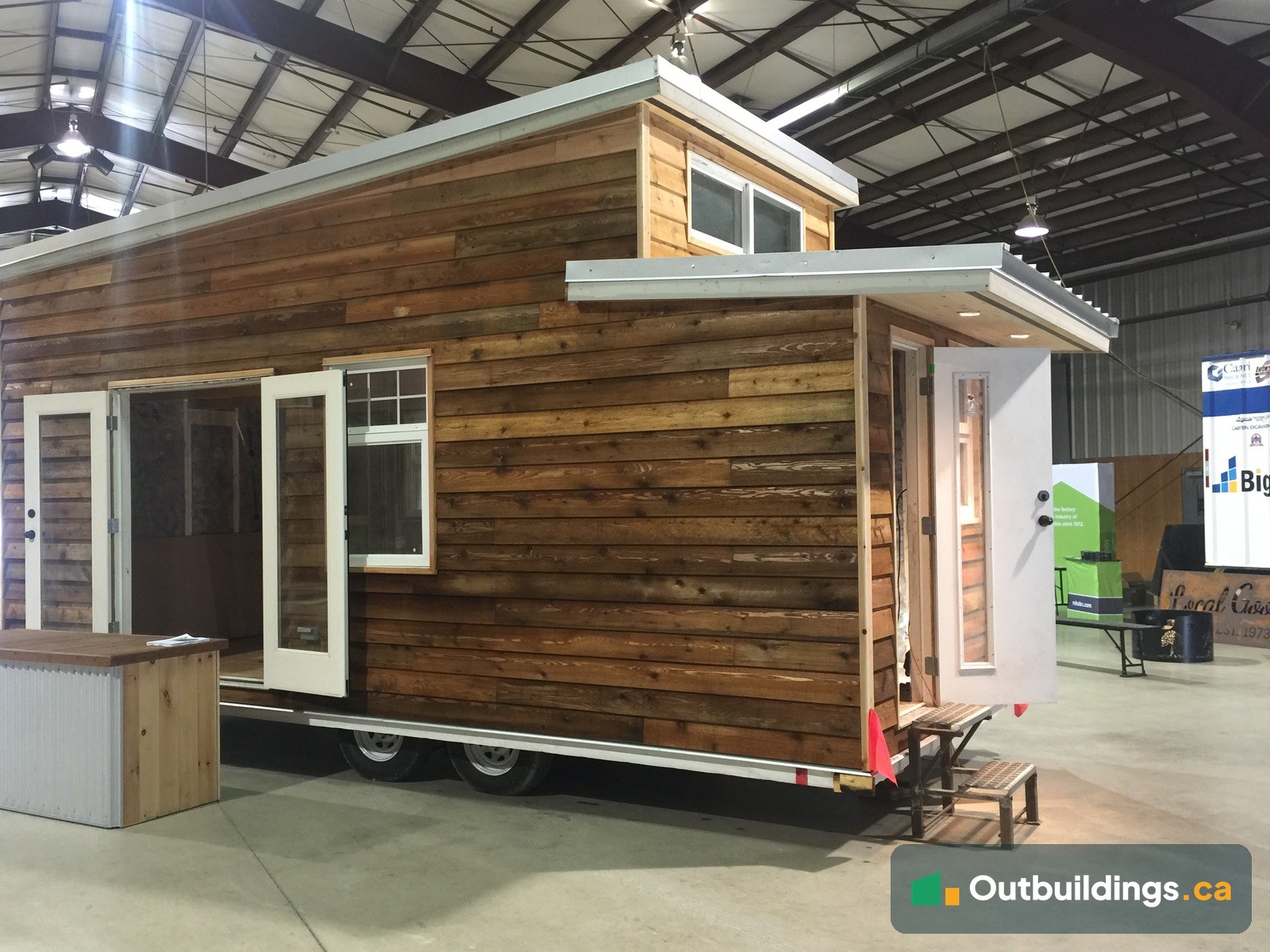
The Samantha Tiny House is a single-slope tiny house on wheels clad in reclaimed cedar siding. It was built in our North Vancouver shop, with work running from early 2016 into early 2017. It is about 22′ long and 10′ wide, and it was built as a CSA Z241 park model.
About this tiny house
The outside is covered in reclaimed cedar siding, so the boards show a mix of weathered browns and fresh cedar tones. The single-slope roof is finished with EPDM, a rubber roofing membrane that works well on low-slope roofs. A small roof shelters the side entry door.
On the long side, a pair of white French doors opens the main room to the outdoors, with a white window with a grille beside them. Two windows sit high on the tall end wall, under the roof. Inside, there is a sleeping loft, a skylight, a built-in closet and storage, and a composting toilet.
The photos below show the house at the shell stage in 2016: framed and insulated in the shop, then with the siding, doors and windows on at an indoor show. The finished house can be seen in the two video tours further down the page.
During the build
Inside, the walls and roof were insulated and covered with a plastic vapour barrier, with red tape sealing the seams. A large beam across the room carries the sleeping loft.


Video tours
Tour by Exploring Alternatives, 2017.
Tour by Tiny House Expedition, 2020.
| Built | North Vancouver shop, early 2016 to early 2017 |
|---|---|
| Size | About 22′ long and 10′ wide |
| Type | Tiny house on wheels, built as a CSA Z241 park model |
| Roof | Single slope with EPDM roofing, plus a small roof over the side entry |
| Siding | Reclaimed cedar |
| Doors and windows | White French doors with a grille window beside them; side entry door |
| Inside | Sleeping loft, skylight, built-in closet and storage, composting toilet |
Why reclaimed cedar siding?
Reclaimed cedar is cedar that has been used before, often on old buildings or fences, and is cleaned up and put to work again. Cedar is a natural choice for siding in a wet coastal climate because it resists rot and insects. Reclaimed boards also come with colour and character that new wood does not have, and reusing them keeps good wood out of the landfill.
The trade-off is that reclaimed boards vary in width, thickness and colour. They need to be sorted, trimmed and checked for old nails before they go up, which takes more time than working with new siding.
Park model (CSA Z241) or RV (CSA Z240RV)?
In Canada, most tiny houses on wheels are built to one of two CSA standards. CSA Z240RV is the standard for recreational vehicles, like travel trailers. CSA Z241 is the standard for park model trailers, which are larger units meant to be set up at one site for longer stays, such as in a park or campground.
Building to a CSA standard can make it easier to insure, finance and place a tiny house, since many parks, insurers and lenders ask for one. The right choice depends on how you plan to use the house and where you plan to put it, so check with your local government and insurer first.
Frequently asked questions
How big is the Samantha Tiny House?
It is about 22′ long and 10′ wide, with a sleeping loft above part of the main floor.
What is the siding made of?
The siding is reclaimed cedar. The mix of old and fresh boards gives the outside its varied brown colour.
What kind of roof does it have?
It has a single-slope roof covered with EPDM, a rubber roofing membrane. A small separate roof shelters the side entry door.
What does CSA Z241 mean?
CSA Z241 is the Canadian standard for park model trailers. This house was built as a park model, which is meant for longer stays at one site rather than frequent travel.
Can I see the finished inside?
Yes. The photos on this page show the house at the shell stage in 2016. The two video tours above show the finished house, including the loft, skylight, built-in storage and composting toilet.